Carnegie Museum of Art | Inventing the Modern World


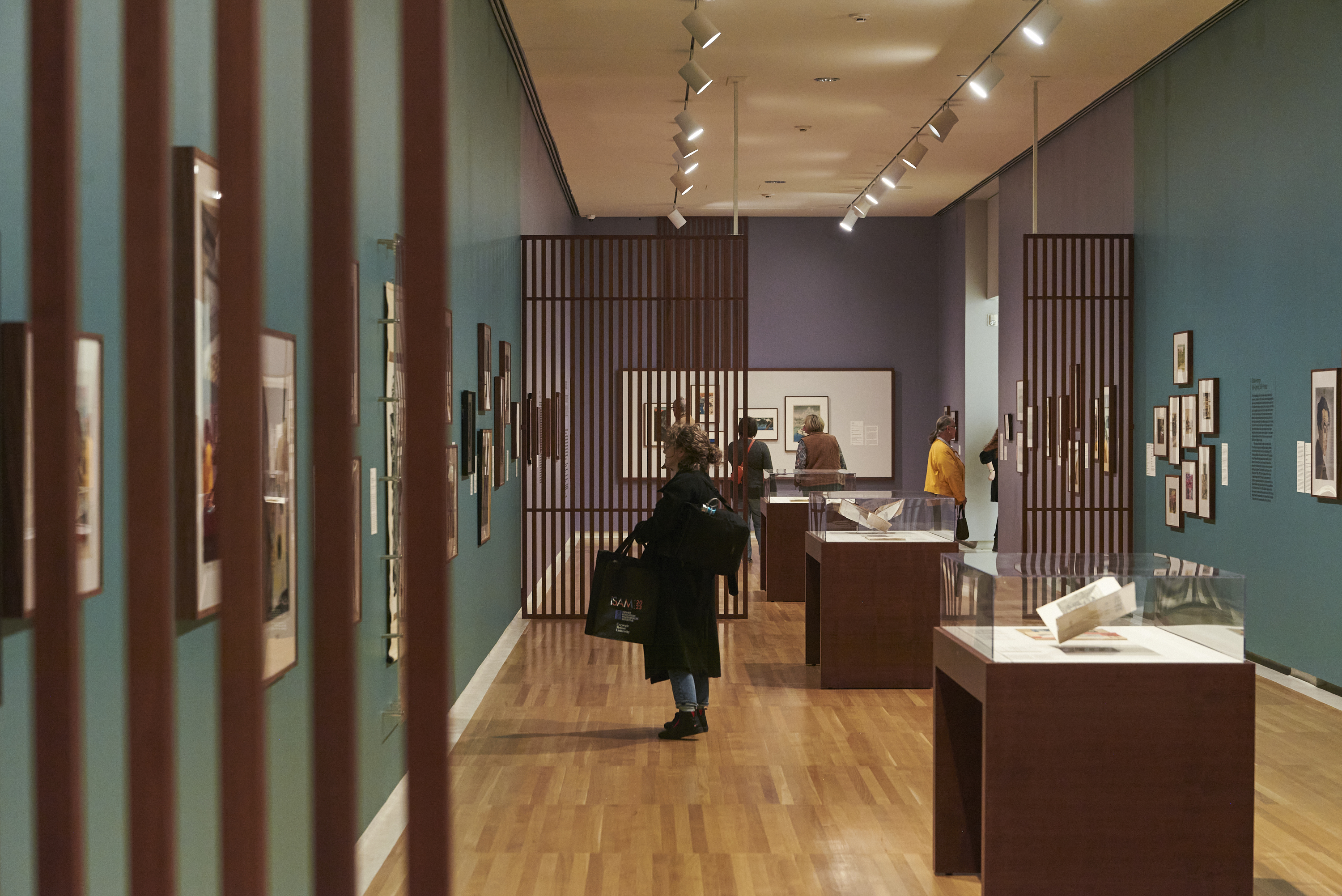
Inventing the Modern World showcases nearly 200 of the most extraordinary works of furniture, metal works, glass, ceramics, textiles, and jewelry first shown at the world's fairs.


OBJECTS OF DESIRE

Select a theme below to learn more about some of the exceptional decorative arts and design objects from this groundbreaking exhibition.

World’s fairs showcased the latest in design, with manufacturers displaying the most stylistically and technologically sophisticated objects. From the 1850s to the 1930s, fashionable tastes changed enormously—from revival designs that recalled the past to those that displayed the cross-cultural influences of an increasingly global marketplace; from the effusive curves of Art Nouveau to the streamlined, minimalist forms of Art Deco.

The monumental Vase Bertin by Sèvres was inspired by Chinese celadon ceramics. The white decoration, called pâte-sur-pâte, however, was a new process in which layers of liquid clay were painstakingly applied and carved to create the design of sea creatures and seaweed. Shown at the Exposition Universelle, Paris, 1855.

Jules-Constant Peyre, designer
French, act. c. 1845–1870
Léopold Jules Gély, decorator
French, act. 1851–1888
Sèvres Porcelain Manufactory, manufacturer
France (Sèvres), 1756–present
Vase Bertin, c. 1855
Glazed porcelain
The Cleveland Museum of Art
This stunning piano represents one of the most ambitious designs in papier-mâché ever created. The japanned surface adorned with gilding and mother-of-pearl belies the fact that the object is made of seemingly fragile but highly durable pasted paper, layered sheet after sheet. The resplendent decoration, inspired by Renaissance arabesques and strapwork, is enhanced with four panels of verre églomisé (decoration under glass), where foiled aluminum is covered with glass beads. Shown at the Exposition Universelle, Paris, 1867.

John Bettridge and Co.
England (Birmingham), 1859–c. 1869
Pianoforte and stool, c. 1867
Gilded and japanned papier-maché, verre eglomisé, mother-of-pearl, brass, aluminium, glass, and original silk, with modern upholstery (stool)
Carnegie Museum of Art, Pittsburgh, Women’s Committee Acquisition Fund, 2011.49
A sensation at the 1878 Paris exposition, Tiffany & Co.’s Conglomerate Vase dazzled the public with its display of fashionable Asian-influenced design and superb Japanese metal techniques, including mokume, in which tiny pieces of different metals were shaped into a block that was twisted and rolled to form a sheet that could be applied to the surface of the vase. Shown at the Exposition Universelle, Paris, 1878.

Tiffany & Co.
United States (New York, NY), 1837–present
Conglomerate Vase, 1878
Silver with copper, gold, iron, and niello
Private Collection, New York
Louis Majorelle’s dynamic silhouettes ensured his position as the foremost practitioner of Art Nouveau at the 1900 Paris world’s fair. This cabinet is characteristic of his furniture, ornamented with carving, marquetry panels of naturalistic motifs, and sumptuous bronze mounts. Model shown at the Exposition Universelle, Paris, 1900.

Louis Majorelle
French, 1859–1926
Cabinet, c. 1900
Kingwood, mahogany, amaranth with various woods, gilded bronze, and modern textile
Indianapolis Museum of Art
The streamlined form and rhythmic circular patterns on a tea service designed by Jutta Sika, one of the most prolific female designers of the Wiener Werkstätte, anticipates biomorphic designs of the mid-20th century. Model shown at the Louisiana Purchase International Exposition, St. Louis, 1904.

Jutta Sika, designer
Austrian, 1877–1964
Wiener Porzellan-Manufaktur, Josef Böck, manufacturer
Austria (Vienna), 1898–1960
Tea service, c. 1902–1903
Porcelain with enamel
The Minneapolis Institute of Arts
Gilbert Rohde's Z-Clock exhibits new materials and a dynamic composition in its compact, streamlined form. Replacing the traditional clock case with a tubular steel support, Rohde emphasized simplicity and lowered production costs. Model shown at A Century of Progress International Exposition, Chicago, 1933.

Gilbert Rohde, designer
American, 1894–1944
Herman Miller Clock Company, manufacturer
United States (Zeeland, MI), 1927–1937
Z-Clock, 1933
Glass, enamel, and chromium-plated steel
Dallas Museum of Art

During the 19th-century world’s fairs, many of the manufacturers’ stands were filled with objects laden with historical associations. The succession of revival styles coincided with advancements in machine production, thus uniting the past with modern industry. Long-forgotten processes made anew were also relevant for demonstrating a craftsman’s dexterity and skill.

Displayed at the first world’s fair held in the United States, this monumental bookcase is decorated with intricately carved spires, arches, and buttresses in the Gothic style. The Gothic Revival had obvious associations with the medieval past; in America it instilled a European legitimacy on the young country’s artistic heritage. Shown at the Exhibition of the Industry of All Nations, New York, 1853.

Gustave Herter
American (b. Germany), 1830–1898
Ernst Plassmann, woodworker
American, 1823–1877
Bulkley and Herter, manufacturer
United States (New York, NY), c. 1852–1858
Bookcase, 1852–1853
White oak, Eastern white pine, Eastern hemlock, and yellow poplar with modern stained glass
The Nelson-Atkins Museum of Art, Kansas City
The Italian jewelry firm Castellani was renowned for jewelry that replicated classical Greek and Roman designs with historical accuracy. This diadem is a precise copy of ancient Etruscan gold victory wreaths unearthed from Roman tombs. Similar designs shown at the London International Exhibition of 1862.

Castellani
Italy (Rome), 1814–1927
Diadem, c. 1860
Gold
Private collection
This coupe by Charles Duron is a triumph of enamel and gold work, made using Parisian techniques and motifs based on 16th- and 17th-century royal gems and jewels. Works of such intricate beauty promoted historical styles by making a connection with the past in technique, form and material. Shown at the Exposition Universelle, Paris, 1867.

Charles Duron
French, 1814–1872
Coupe, c. 1867
Agate with gilded and enameled brass
Carnegie Museum of Art, Pittsburgh, Women’s Committee Acquisition Fund, Gift of Baroness Cassel Van Doorn, by exchange, and Ailsa Mellon Bruce Fund, 2008.76
Decorated with Renaissance arabesques, mythical creatures, and a bearded mask of Neptune, the confetti of glass displays La Farge’s mastery of color and light. The lunette was assembled by fusing different pieces of colored glass with copper wire over an opalescent background. Shown at the Exposition Universelle, Paris, 1889.

John La Farge
American, 1831–1910
Lunette, c. 1880–1882
Glass
The Metropolitan Museum of Art, New York
Émile-Jacques Ruhlmann created furniture that was regarded as modern without being a radical departure from the past. The flattened and stylized vase of flowers of inlaid ivory and light-colored woods on this cabinet indicates the influence of European 18th-century and Neoclassical designs. Similar designs shown at the Exposition Internationale des Arts Décoratifs et Industriels Modernes, Paris, 1925.

Émile-Jacques Ruhlmann
French, 1879–1933
Corner cabinet, c. 1923
Kingwood with mahogany and ivory
Brooklyn Museum

World’s fairs were the greatest global gathering places of their era. For the first time, manufacturers, designers, and an enthusiastic public had immediate access to objects, materials, and technologies from around the world—India, the Middle East, China, Japan, Europe, America, Africa, and beyond. This confluence of cultures left an indelible mark on design and production of the decorative arts.

Rediscovering the technique of enameling with opaque colors on lightly tinted, cold glass, Philippe-Joseph Brocard closely copied the vessel forms, colors, and gilding on 13th- and 14th-century Islamic mosque lamps, even employing pseudo-Mamluk thuluth script. Model shown at the First Annual International Exhibition, London, 1871, and the Exposition Universelle, Paris, 1878.

Philippe-Joseph Brocard
French, act. 1865–1896
Lamp, c. 1871
Glass with enamel and gilding
Carnegie Museum of Art, Pittsburgh, Martha Mack Lewis Fund and Second Century Acquisition Fund, 2008.78
Late 19th-century British manufacturers mined the world’s fair displays of Indian textiles and metalwork for inspiration. In 1878, the Worcester Royal Porcelain Company exhibited this vase derived from Indian metalware jars and textiles, richly enameled with elaborate foliage and gilded arabesques. Shown at the Exposition Universelle, Paris, 1878.

James Callowhill, designer
English, 1838–1917
Worcester Royal Porcelain Company, manufacturer
England (Worcester), 1751–present
Vase, 1876
Porcelain with enamel and gilding
Cincinnati Art Museum
The dynamic scene on this vase, made for the Western market, demonstrates the European taste for asymmetrical compositions of exotic landscapes as well as the introduction of Western glaze technology. The vivid purples and pinks were first introduced by a German chemist and would transform the appearance of Japanese ceramics. Shown at the Centennial International Exhibition, Philadelphia, 1876.

Fukagawa Yeizaemon
Japanese, 1833–1889
Vase, c. 1875
Glazed and enameled porcelain
Philadelphia Museum of Art
This richly decorated tea service by Gorham Manufacturing Company is in their “Oriental East Indian” pattern, based on the complex floral patterns on 19th-century Indian silver made for the British market. Shown at the Exposition Universelle, Paris, 1889.

Gorham Manufacturing Company
United States (Providence, RI), 1831–present
Tea service, 1886–1888
Silver with gilding and ivory
The Nelson-Atkins Museum of Art, Kansas City
One of the most impressive technical innovations by Japanese ceramic artist Miyagawa Kōzan was the development of the kiritōshi (cut through) process, whereby areas of the ceramic body were removed, replaced with porcelain paste, and then re-fired. Shown at the Louisiana Purchase International Exposition, St. Louis, 1904.

Miyagawa Kōzan
Japanese, 1842–1916
Vase, c. 1904
Glazed porcelain
The Walters Art Museum, Baltimore
Raymond Ruys adapted African forms, styles, and hand-craftsmanship in the simple, dynamic design for this Zaire centerpiece bowl. He was inspired by traditional Congolese works, unifying their solidity with the clean, abstracted lines of Art Deco. Shown at the Exposition Internationale Coloniale, Maritime et d'Art Flamand, Antwerp, 1930.

Raymond Ruys, designer
Belgian, 1885–1956
Delheid Frères, manufacturer
Belgium (Brussels), 1828–1981
Zaire centerpiece bowl, 1930
Silver
The Nelson-Atkins Museum of Art, Kansas City

Participating countries took great pride in the objects they exhibited at the world's fairs. National identity was evident in objects that evoked past handicraft traditions, or drew upon national symbols, motifs, resources, and techniques. Objects might reference the distant—and sometimes mythical—past, or look ahead to a country’s bright future.

The Tennyson Vase was presented at the 1867 and 1873 fairs as a nationalistic symbol of British chivalry and morality. The vase pays homage to the Arthurian legends of Alfred Lord Tennyson, and serves as a tribute to the imperial success of Queen Victoria and her Consort, Prince Albert, who was seen as a modern King Arthur. Shown at the Exposition Universelle, Paris, 1867, and the Weltausstellung 1873 Wien, Vienna.

Henry Hugh Armstead, designer
English, 1828–1905
C. F. Hancock & Sons, manufacturer
England (London), 1849–present
Tennyson Vase, 1867
Silver and gilded silver with velvet
Carnegie Museum of Art, Pittsburgh, Ailsa Mellon Bruce Fund and Berdan Memorial Trust Fund, 2007.57
Manufactured exclusively for the 1876 Philadelphia exhibition, the Century Vase is laden with nostalgic images from America’s rich past and scenes of modern progress. The unmistakable profile of George Washington observes depictions of William Penn’s treaty with Native Americans and the Boston Tea Party as well as fast-moving steamboats and sewing machines. Shown at the Centennial International Exhibition, Philadelphia, 1876.

Karl L. H. Müller, designer
American, 1820–1887
Union Porcelain Works, manufacturer
United States (Greenpoint, Brooklyn), 1863–c. 1922
Century Vase, 1876
Porcelain with enamel and gilding
High Museum of Art, Atlanta
The 1893 Chicago fair featured a reproduction Viking ship moored on Lake Michigan. Tiffany & Co. celebrated ancient American ties to Norway with the imposing Viking punch bowl. Nordic motifs are executed using the ancient process of damascening, or inlaying steel with silver and gold. Shown at the World's Columbian Exposition, Chicago, 1893.

G. Paulding Farnham, designer
American, 1859–1927
Tiffany & Co., manufacturer
United States (New York, NY), 1837–present
Viking punch bowl, c. 1893
Iron with silver, gold, and wood
The Metropolitan Museum of Art, New York
Textiles were considered a particularly strong aspect of Norwegian national heritage, and Gerhard Munthe attempted to transfer traditional form and color into a more modern idiom. Inspired by Nordic mythology and medieval tapestries, Munthe’s textiles abound in motifs inspired by ancient runes and folktales. Model shown at the Louisiana Purchase International Exposition, St. Louis, 1904.

Gerhard Munthe, designer
Norwegian, 1849–1929
Nini Stoltenberg, weaver
Norwegian, 1877–1968
Nordenfjeldske Kunstindustrimuseum
Weaving School, manufacturer
Norway (Trondheim), 1898–1909
The Daughters of the Northern Lights (Aurora Borealis) or The Suitors, 1895
Wool and cotton
The Wolfsonian-Florida International University, Miami Beach, The Mitchell Wolfson, Jr. Collection
Jewelry displayed at the fairs expressed patriotic ideas through easily recognizable symbols or native materials. G. Paulding Farnham of Tiffany & Co. made remarkable use of American gemstones and Native American motifs to create a quintessentially American style. Shown at the Exposition Universelle, Paris, 1900.

Tiffany & Co.
United States (New York, NY), 1837–present
Corsage ornament, 1900
Montana sapphires, diamonds, demantoid garnets, topaz, blued steel, gold alloys, and platinum
The Walters Art Museum, Baltimore, Acquired by Henry Walters, 1900, 57.939
The colorful, abstract decoration on Arabia ceramics takes a cue from early Finnish textiles and embroideries. Similar designs shown at Prima Esposizione Internazionale d’Arte Decorativa Moderna, Turin, 1902.

Arabia Porcelain Factory
Finland (Helsinki), 1874–present
Fennia series vase, c. 1902
Glazed earthenware
Carnegie Museum of Art, Pittsburgh, Purchase: Gift of Dr. David Werner and Sue Werner, 2011.2

World’s fairs aimed to instill in their audiences an appreciation of modern manufacturing and the creativity behind it. The quest for ingenuity would remain a common thread from 1851 to 1939. Inventive materials and manufacturing processes—such as aluminum, cast iron, steam-bent wood, plastics, and plate glass—transformed everyday life, creating a wider range of products for public consumption.

New ideas about comfort and convenience emerged as inventors and manufacturers experimented with the versatility of iron and steel. The ingenious Centripetal spring chair adapts the bow-shaped steel springs developed for comfortable seating on bumpy trains for parlor furniture. Model shown at the Great Exhibition of the Works of Industry of All Nations, London, 1851.

Thomas E. Warren, designer
American, act. 1849–1852
American Chair Company, manufacturer
United States (Troy, NY), 1829–1858
Centripetal spring chair, c. 1850
Painted and gilded iron, steel, and wood with modern upholstery
Saint Louis Art Museum
Prior to the invention of modern smelting processes, aluminum was a highly prized metal on par with gold. Jewelry manufacturers saw commercial opportunities in the new material, praised for its intrinsic beauty, light weight, and resistance to corrosion. Similar designs shown at the London International Exhibition of 1862.

France
Bracelet, c. 1858
Aluminum and gold
Carnegie Museum of Art, Pittsburgh, Martha Mack Lewis Fund, 1998.5
In the 1860s, chromolithography revolutionized the ceramics industry. This process, where lithographic prints were imbued with glaze, allowed patterns to look like they were hand-painted, when they were actually industrially produced. Shown at the Exposition Universelle, Paris, 1867.

J. Klotz
France (Paris), act. c. 1867
Vases, 1867
Glazed porcelain with chromolithography and gilding
Minneapolis Institute of Arts
Lobmeyr’s centerpiece and bowls display some of the most unusual technical accomplishments in glass. The inclusion of rare earths, such as uranium, in the glass makes the objects change color under different types of light. Shown at the Exposition Internationale des Arts Décoratifs et Industriels Modernes, Paris, 1925.

Marianne Rath, designer
Austrian, 1904–1985
Karlsbader Kristallglasfabriken A.G., manufacturer
Czech Republic (Karlovy Vary), under name 1922–1941
J. & L. Lobmeyr, retailer
Austria (Vienna), 1823–present
Centerpiece and bowls, c. 1925
Glass
J. & L. Lobmeyr, Vienna
The Panels of Progress, part of Westinghouse’s display at the 1933 Chicago fair, used innovative materials to promote the company’s products of mass communication and electrification. Each panel was made of Micarta—a new laminate composed of canvas, paper, and Fiberglas—with designs in aluminum and steel, materials that resonate in Pittsburgh. Shown at A Century of Progress International Exposition, Chicago, 1933.

Donald R. Dohner, designer
American, 1897–1943
Westinghouse Manufacturing and Electric Company
United States (Pittsburgh, PA), 1886–present
Radio Broadcasting panel, 1933
Micarta with aluminum, steel, and wood
The Wolfsonian-Flordia International University, Miami Beach, Flordia, The Mitchell Wolfson, Jr. Collection
PPG included an all-glass house in the “Town of Tomorrow,” designed to demonstrate how glass could “make your home more modern, more beautiful, and more livable.” Among the items included was this innovative chair with a frame of slumped plate glass. Model Shown at the New York World’s Fair, 1939.

Attributed to Louis Dierra, designer
American, act. c. 1939
Pittsburgh Plate Glass Co., manufacturer
United States (Pittsburgh, PA), 1883–present
Chair, c. 1939
Glass with synthetic upholstery
Carnegie Museum of Art, Pittsburgh, DuPuy Fund, 83.78.2


PIANOFORTE IN-DEPTH

See more of our videos >>


FROM THE BLOG

Objects of Desire: Jason's Pick >>
Objects of Desire: Katie's Pick >>


<< SEE THE EXHIBITION PAGE