Ailsa Mellon Bruce Galleries


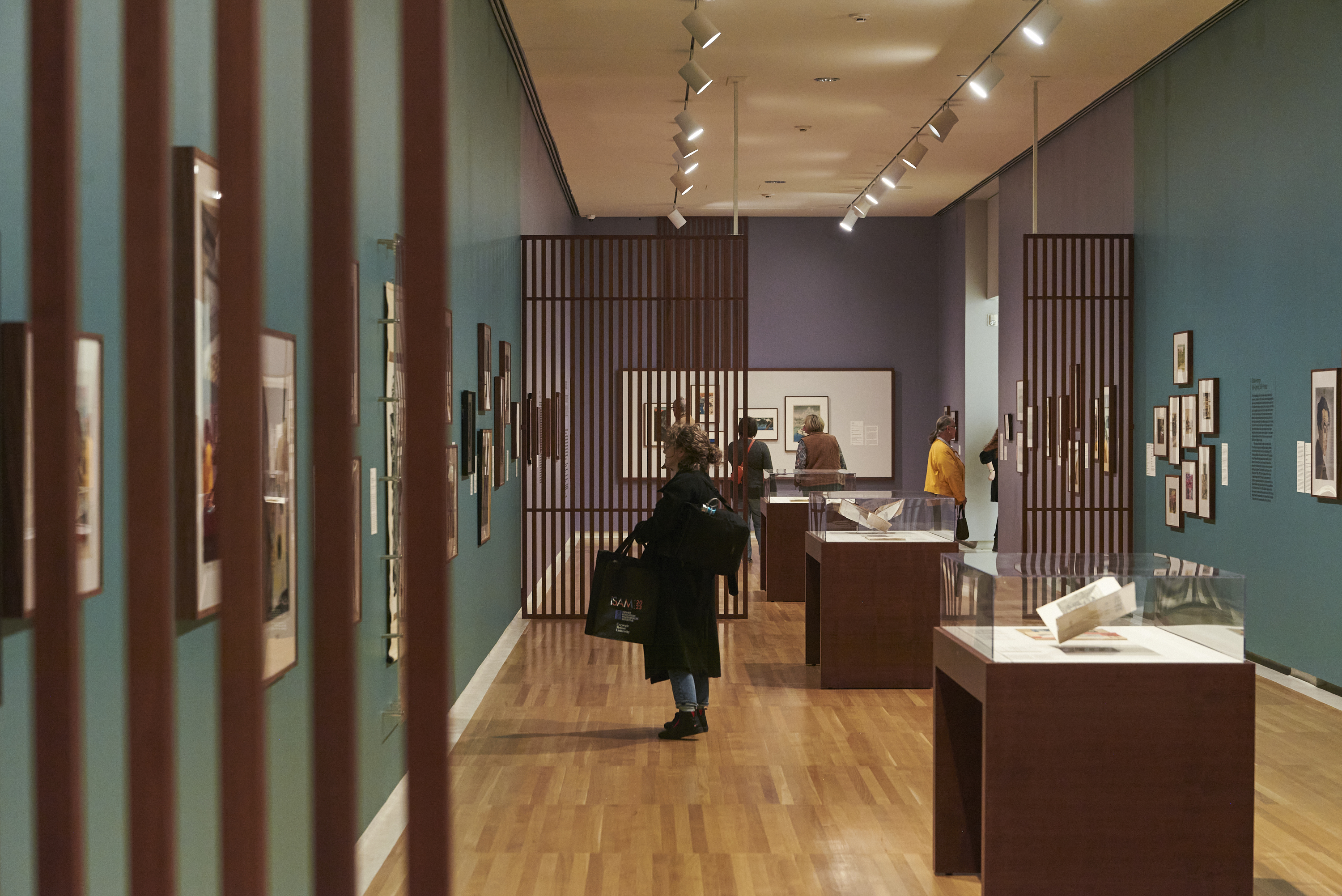
Reopened in November 2009, the renovated Ailsa Mellon Bruce Galleries highlight nearly 500 objects from the museum’s permanent collection of decorative arts and design. The first major reinterpretation of the decorative arts collection in two decades, the installation traces the evolution of style and design in the Western world from the mid-18th century to the present. The evolving story of decorative arts in  Pennsylvania and the greater Ohio River Valley during this time period forms a connecting thread throughout the installation.

The 18th-century gallery compares the scrolling organic curves of the Rococo and late Baroque styles with the balanced symmetry and geometric patterning of Neoclassicism. The 19th-century gallery explores revivals of historic styles, as well as the advent of the Art Nouveau and Arts and Crafts movements, focused through the museum’s strong collection of technologically and stylistically innovative objects shown at world’s fairs and international exhibitions. This gallery also features a suite of American painted and gilded parlor furniture from PicNic, a distinguished Greek revival mansion built in Pittsburgh in the 1830s; the suite is displayed in a setting that evokes its original location and social function. The installation continues with examples from the Art Deco movement and mid-20th-century Modernism, as well as the museum’s growing collection of contemporary craft and design. Educational interactives throughout the galleries provide opportunities for hands-on learning.

In the inaugural installation, the first gallery explores the past and present of decorative arts and design at Carnegie Museum of Art. A display of significant early acquisitions pays tribute to museum benefactor Ailsa Mellon Bruce; an important group of early Pennsylvania decorative arts highlights the artistic heritage of our region; and a stunning installation of chairs offers a unique view of the evolution of style and design into the 21st century.

The Ailsa Mellon Bruce Galleries were originally constructed in 1907 as a hall for reproduction bronze casts of objects from ancient Pompeii and Herculaneum; in later years, it served as temporary exhibition space. In 1976, the galleries became the museum’s permanent home for decorative arts, named in honor of Ailsa Mellon Bruce (1901–1969), heiress to the fortunes of Pittsburgh business magnate and US Secretary of the Treasury Andrew W. Mellon. Mrs. Bruce was a passionate collector and a dedicated supporter of the arts In 1970, nearly 3,000 objects from her collection came to Carnegie Museum of Art.