News Release

Picturing the City: Downtown Pittsburgh, 2007–2010, September 23, 2011–March 25, 2012, Carnegie Museum of Art, Gallery One

August 17, 2011

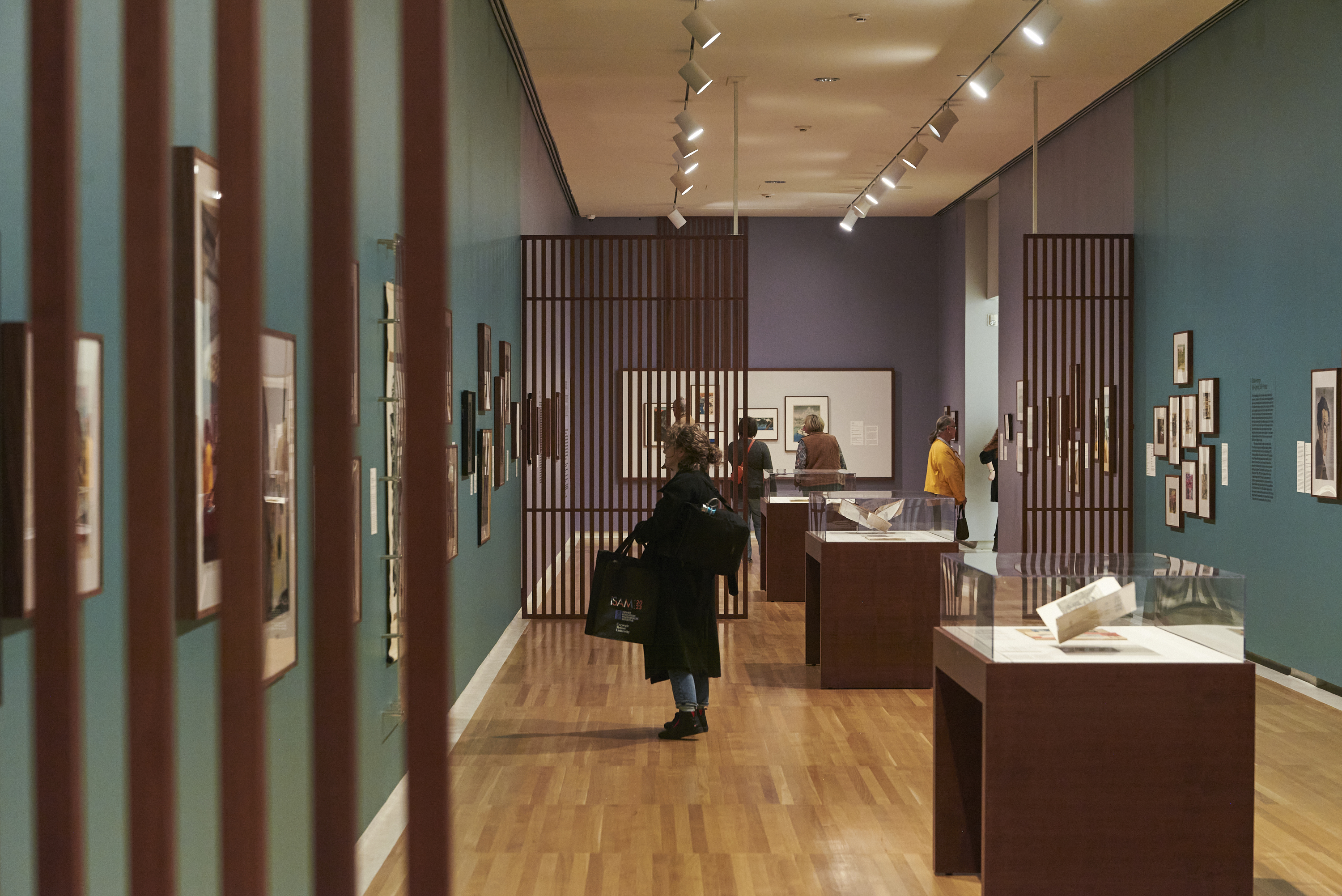
Pittsburgh, Pennsylvania … For more than a century, the city of Pittsburgh has been the subject of some of America’s most important photographers. The exhibition Picturing the City: Downtown Pittsburgh, 2007–2010, on view September 23, 2011 to March 25, 2012 at Carnegie Museum of Art, adds to this important photographic legacy by presenting 86 recent images from nine contemporary photographers who call the city their home.

Inspired by the city’s rich documentary tradition, the photographers recorded a Downtown where people, buildings, and landscapes have been altered dramatically in the wake of $2 billion in public-private development projects.  The changes are noted along rivers, in parks, buildings, and transportation systems; and they are brought to life through the celebrations and challenges experienced by people who live and work Downtown.

The images in Picturing the City were selected by Linda Benedict-Jones, the museum’s curator of photography, from hundreds of images shot for the Downtown Now Photography Project. The project was created by The Heinz Endowments to document the rapidly changing face of Downtown Pittsburgh. Between 2007 and 2010, photographers Melissa Farlow, Jim Judkis, Richard Kelly, Kenneth Neely, Annie O’Neill, Mark Perrott, Martha Rial, Renee Rosensteel, and Dylan Vitone photographed Pittsburgh’s central business district and surrounding areas, documenting the vibrancy of a city undergoing a renaissance that rivals any previous development boom.

Picturing the City presents these nine artists as the new generation in a long history of nationally-regarded photographers using Pittsburgh as their subject. One hundred years earlier, from 1907 to 1910, the Pittsburgh Survey became one of the first sociological studies of urban industrial America, with Lewis Hine creating some of the earliest examples of socially committed photojournalism. In the 1950s, efforts to document the city through the Pittsburgh Photographic Library were an important part of the city’s first renaissance. A small selection of images from both of these historic examinations of Pittsburgh are included in Picturing the City, along with work by notable 20th-century photographers W. Eugene Smith and Charles “Teenie” Harris, placing the new Downtown Now photography in illustrious company—and important context.

“There is a long tradition of photographing Pittsburgh, with a formidable body of work behind it,” says Benedict-Jones. “This exhibition adds to that existing vocabulary begun more than 100 years ago. On their own, these new works are artistic images made for documentary purposes—as they are meant to be. But in the context of this exhibition, they give us a new way to look at the city around us, and should be seen as works of art.”

 A New Vision

The original mission of the Pittsburgh Photographic Library (PPL) was to document life in Pittsburgh at a time of sweeping change. During the 1950s, “Renaissance I,” as it is known today, brought about changes to everything from the city’s air quality to landscape architecture and zoning laws. More than 50 years later, the Endowments realized that similarly significant changes to the urban environment of Pittsburgh required documentation. From this, the Downtown Now Photography Project and its vision for artful documentation of a new Downtown Pittsburgh was born.

With consultation from Benedict-Jones, the Endowments selected a team of photographers to capture this new period of fast-paced change in Pittsburgh’s landscape. The documentation lasted three years, with each photographer working as long as two years each on the project. Concentrating mainly on the heart of Downtown, these highly regarded Pittsburgh-based photographers created a wealth of images that capture the city, its residents, and historic events.

The resulting archive of photographs covers a variety of important changes and occurrences of the past few years—from the run-up to the Super Bowl and Stanley Cup championships and the tremendous record-setting snowfall in early 2010 dubbed “Snowmaggedon”; to protests against the G-20 meeting; to the 2009 funeral of  three Pittsburgh police officers shot in the line of duty. The exhibition also illustrates the growth of Downtown in the construction of the August Wilson Center, the Rivers Casino and in the lively crowds of the Cultural District. These images will be displayed alongside the photographs of everyday contemporary Pittsburgh: a woman buys food from a farmer’s market; young people move mattresses into an apartment; a line of commuters waits for the bus; a bike courier delivers a package on a snowy street; the city’s momentarily calm river reflects a bridge.

 A Historic Tradition

Pittsburgh at the turn of the last century was ripe for study. Not only was it the heart of industrial America, but it was a hotbed of immigration and population explosion, of business and innovation, and of all the social and environmental ills that accompany rapid industrial growth. In 1907, New York’s Russell Sage Foundation commissioned the Pittsburgh Survey, a wide-ranging study of sociological conditions in the city, which included scores of investigators under the auspices of researcher and progressive activist Paul Kellogg, including photographer Lewis Hine. The resultant study filled six volumes and remains a cornerstone of 20th-century American urban sociology, with Hines’s photos considered seminal artifacts of early industrial America. Picturing the City includes one of Hine’s vintage photographs, along with a large panoramic photograph of Pittsburgh made in 1908 by the Detroit Publishing Company. More important, the Pittsburgh Survey—as one of the first such examinations of a city in America—provides a historic framework for all photo documentation of Pittsburgh that followed.

Picturing the City includes works captured for the PPL by some of the most important photographers of 20th-century America. Photographs of men, women, structures, and landscapes of 1950s Pittsburgh by Esther Bubley, Harold Corsini, Clyde Hare, Sol Libsohn, and Richard Saunders are presented in the exhibition. Also included are works by important other photographers, such as famed Life photojournalists Margaret Bourke-White and Smith, who spent three years in the mid-1950s documenting Pittsburgh in tens of thousands of photographs; and Harris, whose images of African American life in Pittsburgh from the 1930s through 1970s have become instrumental in documenting mid-20th-century black America.  The museum will be presenting a retrospective of Harris’s work in the exhibition Teenie Harris: Photographer, An American Story from October 26, 2011 to April 8, 2012.

Picturing the City in the future

One important difference between the work of the Downtown Now photographers and their forebears is the inclusion of a database of information such as GPS coordinates for each image. According to Benedict-Jones, that information helps the image archive remain a “living” project.

“Our predecessors in the Pittsburgh Survey and Pittsburgh Photographic Library—even photojournalists such as Charles “Teenie” Harris—left us little in the way of information about their images,” says Benedict-Jones. “In many cases we don’t even know for certain where a photograph was taken. But today, the Endowments uses sophisticated technologies to support the permanent record-keeping of both the digital and the narrative information of the DNPP Archive. One exciting aspect of all this is that  we don’t know what future generations may use this work for—so we realize that keeping all of that data is important.”

But while each of these images documents a moment, in Picturing the City, the value of their scenes extends from documentation into the realm of art thanks to the talent of the photographers and, importantly, the context of the exhibition. Just as the works of Hine, Smith, Bourke-White, and Harris are regarded as fine art, so the work of today’s exceptional photographers will become part of a legacy of artistic documentation of Pittsburgh.

“I have no doubt that the new photographs in Picturing the City will be viewed as art objects 50 and 100 years from now,” says Benedict-Jones. “And in some ways, that’s when their true value will best be understood. It’s an exciting exhibition to organize because its subjects are the past and the present, but what it’s really about is Pittsburgh’s future. The best audience for this project has not yet been born.”

Programming

Picturing the City: Downtown Pittsburgh, 2007–2010 Opening Event

Thursday, September 22, 6 p.m.

Celebrate the opening of the exhibition Picturing the City. Free with cash bar.

“Bound Together” Book Club

Thursday, October 13, 6:30–7:30 p.m.

Meet in the Museum of Art lobby; Free

Space is limited; call 412.622.3288 to register.

This collaborative program of Carnegie Museum of Art and Carnegie Library of Pittsburgh presents a casual and thoughtful 15-minute gallery talk in Picturing the City. The talks are followed by a book discussion in the galleries with fellow readers and library staff. This month’s book selection is Carnegie Stewart O’Nan’s Emily Alone.

Drop-in Tours

Pittsburgh in Photographs

Starting October 29

Fridays–Sundays, 12:30–1:15 p.m.

Discover how Pittsburgh has inspired photographers for generations. Begin with an overview of the exhibition Picturing the City, followed by an introduction to Teenie Harris, Photographer: An American Story. Daily guided drop-in tours are free with museum admission and meet in front of the museum store. Teachers earn Act 48 hours for participation in all tours.

Adult Studio Class

Picturing Neighborhoods

Saturdays, October 29 and November 5 (2 sessions)

11 a.m.–3 p.m.

$40 members/$48 nonmembers

Explore the art of “street photography” with Picturing the City artist Dylan Vitone. In the first session, study compositions and techniques used by Vitone and other artists in the exhibition, discussing the ways that a photograph captures a sense of place. In take-home exercises, students will photograph their own neighborhoods and another assigned location, and bring the results (digital or print) to session two for discussion and critique. Bring your camera to the first session. Call 412.622.3288 to register. Teachers earn Act 48 hours for participation in all adult art classes.

Adult Studio Class

Painting Street Scenes in Watercolor

October 2–November 6 (6 sessions)

11 a.m.–3 p.m.

$96 members/$120 nonmembers

Capture Pittsburgh in watercolor! Join one of the Picturing the City photographers in the exhibition to study composition. Then venture out into city locales, including Market Square and the Point, for three sketching sessions with renowned watercolorist Bob Bowden. Use a digital camera for reference photographs when finishing compositions in the studio. Call 412.622.3288 to register. Teachers earn Act 48 hours for participation in all adult art classes.

Support

Major support for this exhibition is provided by The Heinz Endowments.

General operating support for Carnegie Museum of Art is provided by the Endowments and Allegheny Regional Asset District. Carnegie Museum of Art receives state arts funding support through a grant from the Pennsylvania Council on the Arts, a state agency funded by the Commonwealth of Pennsylvania.


Carnegie Museum of Art

Located at 4400 Forbes Avenue in the Oakland section of Pittsburgh, Carnegie Museum of Art was founded by industrialist and philanthropist Andrew Carnegie in 1895. One of the four Carnegie Museums of Pittsburgh, it is nationally and internationally recognized for its distinguished collection of American and European works from the 16th century to the present. The Heinz Architectural Center, part of Carnegie Museum of Art, is dedicated to enhancing understanding of the physical environment through its exhibitions, collections, and public programs. For more information about Carnegie Museum of Art, call 412.622.3131 or visit our web site at www.cmoa.org.

Contact:

Jonathan Gaugler
412.688.8690
gauglerj@carnegiemuseums.org