News Release

Cathy Wilkes at Carnegie Museum of Art, November 12, 2011–February 26, 2012

June 29, 2011

Pittsburgh, PA…Carnegie Museum of Art will present Cathy Wilkes, the first solo American museum exhibition to explore the full range of work by artist Cathy Wilkes (b. 1966), including painting, sculpture and installation art. The presentation includes nine of Wilkes’s paintings, a sculpture, and one newly commissioned installation. Cathy Wilkes is the 67th edition of the museum’s ongoing Forum series, which reflects the mission of the museum in connecting local audiences to a global network of important contemporary artists.

Wilkes is best known for haunting sculptures and installations that often examine personal experiences, such as motherhood. She was nominated for the 2008 Turner Prize—Britain’s most famous award for contemporary art. Her paintings also indirectly express intimate subject matter through roughly hewn, colorful abstraction. But according to Dan Byers, associate curator of contemporary art at Carnegie Museum of Art and curator of the exhibition, it is through the combination of painting and sculpture that Wilkes’s work truly comes alive.

“In her studio, Wilkes’s paintings and sculptures are all created as part of the same process of continuous and interconnected labor and experimentation,” says Byers. “It is important that these works are exhibited together to show a comprehensive view of the artist’s practice. This is an exciting opportunity for our audiences to see the way her work in different media comes together, and to experience new artwork from an international artist who has shown rarely in this country.”

About the Artist

Born in Belfast, Northern Ireland, in 1966, Wilkes is of the “YBA” generation—the “young British artists” who emerged in the 1990s and include Damien Hirst and Tracey Emin in their ranks. But Wilkes had neither the right address—she chose Glasgow, Scotland, an important center for contemporary art in the UK, rather than London for her studio—nor mindset, developing a far more introspective approach over many of the YBAs’ penchant for spectacle.

During the 1990s and 2000s, Wilkes became well-known for installation pieces that combine sculpted and appropriated objects. Notably, she often included shop-window mannequins that she altered and arranged into humanistic—if sometimes disturbing—domestic scenes. Sculpted and found objects are often massed in clumped arrangements, or dispersed against walls or on the floor. Highly crafted figurative elements made from clay or plaster are combined with vitrine-like structures, mass-produced objects, such as cell phones, and domestic items like jam jars, mixing bowls, vegetable peelers, or children’s clothing. Together, these objects communicate intense emotion.

“Wilkes’s work is very exposed,” says Byers. “It’s generated by emotional states of loss and an almost transcendental sense of life’s cycles of birth, and death, as well as the artist’s own experiences of motherhood. Due to this intense combination, the work can be almost hard to take in. But when visitors look closely at the paintings as well as the sculpture, they will see these small, intricate decisions, great care, and moments of grace and beauty.”

On View at Carnegie Museum of Art

The works presented in the exhibition are relatively new to Wilkes’s practice. She began incorporating paintings as components of her installations, often attaching them to the sculptures, and as additional elements hung on walls. While her canvases have gained new levels of independence apart from the sculptures, it is the relationship between the two—in Wilkes’s artistic process and in the way audiences experience the works together—that confirmed the importance of the work to Byers after a visit to her Glasgow studio.

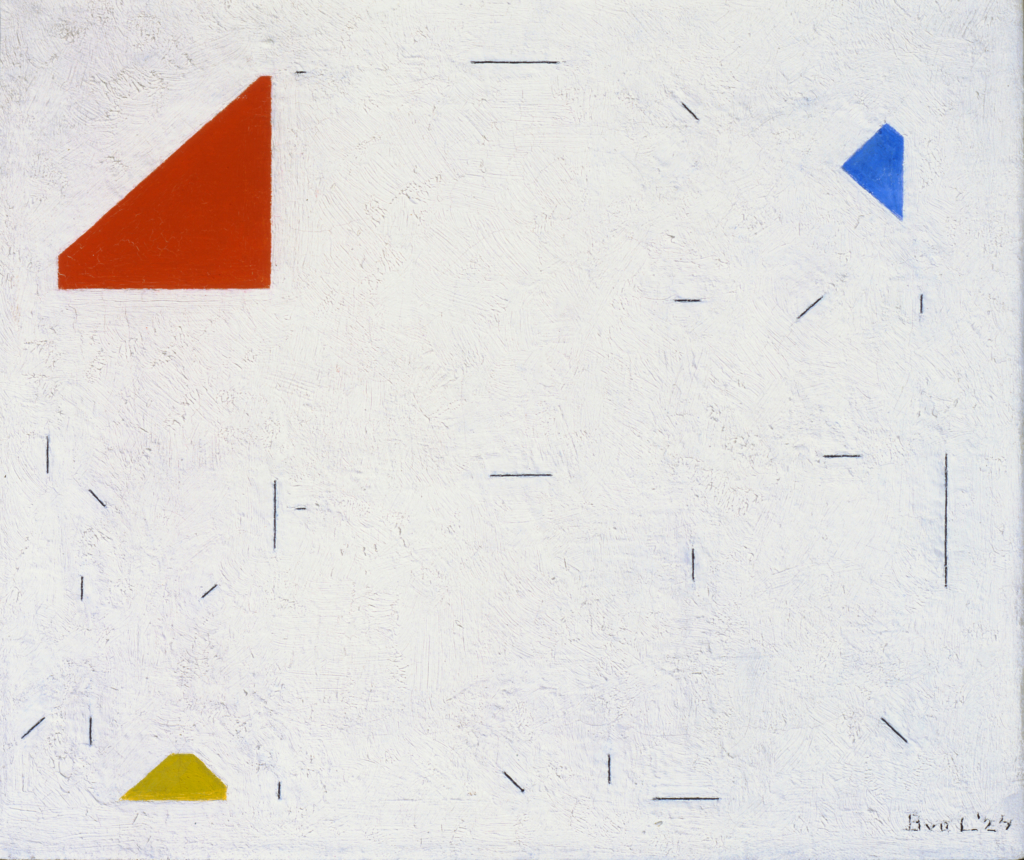
“These paintings live long lives in the studio before anyone sees them,” Byers said. “They’re worked on, set aside, often scrubbed and worked on again, so the paintings have really gone through a process by the time they’re seen in public. Wilkes’s small paintings use complex color combinations, abstraction, and an intuitive geometry interspersed with figurative and landscape references while evoking the physicality and the highly varied textures of her sculptures.”  Wilkes’s paintings also include fragmented words and phrases, inexpensive pieces of china, dried flowers, and other everyday objects. The installation at the Museum of Art will concentrate on Wilkes’s paintings that depict rough forms of geometric abstraction.

“When you combine the abstract, strangely colorful paintings with the more starkly figurative and personal sculptures, the paintings act as something of a respite, a visual and emotional change of tone. The works as a whole become more engaging when you can go back and forth between those two sides of her art.”

Cathy Wilkes at Carnegie Museum of Art is part of a busy international exhibition schedule for Wilkes, with solo shows of her work opening in 2011 in Munich and Bremen, Germany and Aspen, Colorado.

“Cathy Wilkes is an artist who has simultaneously expanded and honed her process for nearly 20 years,” Byers said. “Her visceral approach to materials, suggestive figuration, and combination of abstraction provide an aesthetically vibrant and deeply humanistic body of work. Pittsburgh and Carnegie Museum of Art are truly fortunate to present this exhibition.”

Artist Biography

Cathy Wilkes was born in Belfast, Northern Ireland, in 1966 and currently lives and works in Glasgow, Scotland. She attended Glasgow School of Art from 1985 to 1988 and received her MFA from the University of Ulster in 1992. Recent one-person exhibitions of her work include Aspen Art Museum (2011); Kunstverein, Munich (2011); Milton Keynes Gallery, England (2008); Galleria Raucci/Santamaria, Naples (2005, 2010); Douglas Hyde Gallery, Dublin (2004); Galerie Giti Nourbakhsch, Berlin (2001, 2004, 2007, 2009); Migros Museum, Zurich (2002); and The Modern Institute, Glasgow (1999, 2008).  Wilkes has participated in many group exhibitions, including Abstract Resistance, Walker Art Center, Minneapolis (2010); Head-Wig (Portrait of an exhibition), Camden Art Centre, London (2009); Turner Prize Exhibition, Tate Britain, London (2008); If I Can’t Dance, I Don’t Want To Be Part Of Your Revolution, Museum van Hedendaagse Kunst, Antwerp (2007); 4th Berlin Biennial for Contemporary Art (2006); Selective Memory, Scottish Pavilion, Venice Biennale, and Scottish National Gallery of Modern Art, Edinburgh (2005); Gwangju Biennale, South Korea (2002); and Beck’s Futures, ICA, London (2000); She was nominated for the Turner Prize in 2008.

Support

Support for this exhibition is provided by the Whitecap Foundation. General operating support for Carnegie Museum of Art is provided by The Heinz Endowments and Allegheny Asset District. Carnegie Museum of Art receives state arts funding support through a grant from the Pennsylvania Council on the Arts, a state agency funded by the Commonwealth of Pennsylvania.

Carnegie Museum of Art

Located at 4400 Forbes Avenue in the Oakland section of Pittsburgh, Carnegie Museum of Art was founded by industrialist and philanthropist Andrew Carnegie in 1895. One of the four Carnegie Museums of Pittsburgh, it is nationally and internationally recognized for its distinguished collection of American and European works from the 16th century to the present. The Heinz Architectural Center, part of Carnegie Museum of Art, is dedicated to enhancing understanding of the physical environment through its exhibitions, collections, and public programs. For more information about Carnegie Museum of Art, call 412.622.3131 or visit our web site at www.cmoa.org.

Contact:

Jonathan Gaugler
412.688.8690
gauglerj@carnegiemuseums.org