News Release
Andrey Avinoff: In Pursuit of Beauty, February 26–July 24, 2011, Carnegie Museum of Art, Works on Paper Gallery
“I bow to scientific fact until five o’clock. After that I may have other ideas.” –Andrey Avinoff
Pittsburgh, Pennsylvania… Carnegie Museum of Art presents an exhibition that unveils the visionary and rarely seen art of the brilliant and multitalented Andrey Avinoff (1884–1949).
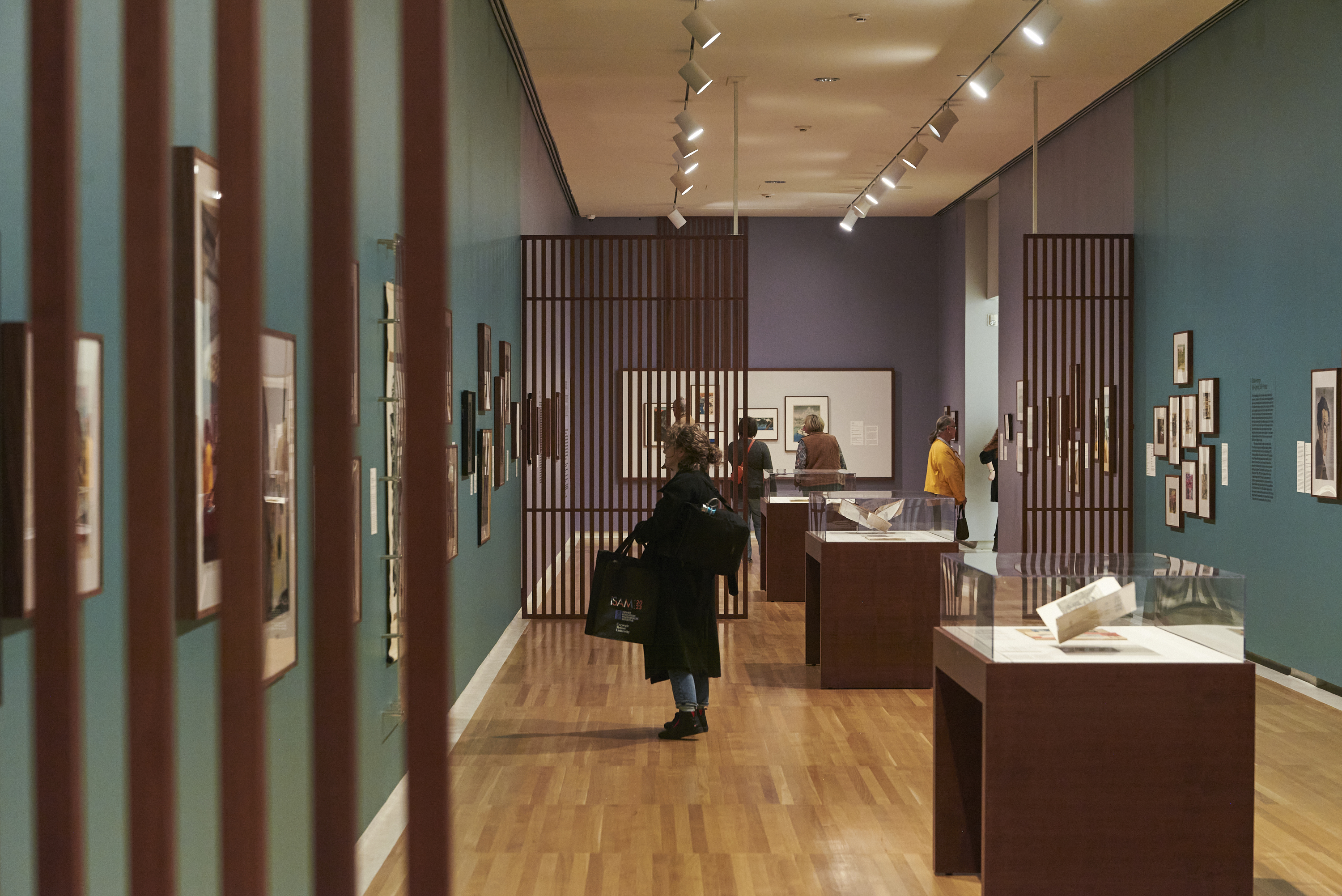
The exhibition features more than 50 works of art by the entomologist and former director of Carnegie Museum of Natural History (1926-1945), including many of his watercolors, most of which have rarely been seen. Louise Lippincott, curator of fine arts at Carnegie Museum of Art, conducted years of intense research to organize the exhibition, which tells Avinoff’s story in full for the first time.
“Andrey Avinoff emerges as an important historical figure. He was a gay Russian artist who made it in the very straight world of American science and education, and an autocratic European traditionalist who helped create the modern, anything-goes New York scene. His intriguing body of artwork, multifaceted interests, and equally multifaceted identity significantly enhances our understanding of twentieth-century art, in all its vitality and complexity,” said Lippincott.
Like the butterflies he pursued in exotic locations, Avinoff’s life encompassed inspiring metamorphoses. From gentleman-in-waiting at the court of the Russian tsar to tireless researcher in the mountains of Tibet; from upstate New York dairy farmer to successful New York City commercial illustrator; from director of Carnegie Museum of Natural History in Pittsburgh to important collaborator with Alfred Kinsey, Avinoff transformed himself as the culture and politics around him changed.
During his lifetime, Avinoff was known worldwide for his scientific research on the influence of geography and ecology on the evolution of butterflies. But he also created a rich body of gorgeous, meticulously painted watercolor paintings that expressed his wide-ranging ideas about the unity of the natural world and of life itself. Many of Avinoff’s artworks can be read as symbolist fantasies or surrealist nightmares, often depicting iridescent butterflies, exquisitely detailed flowers, and translucent, reflective surfaces such as flowing water, soap bubbles, gems, and jellyfish. His private feelings—such as his loyalty to Russian traditions and a deeply spiritual view of nature—are all expressed in his art.
In addition to his artwork, the show also features many of Avinoff’s scientific illustrations of butterflies and plants, and the mounted and preserved butterflies that he collected and donated to Carnegie Museum of Natural History.
Biography
Avinoff was born in Tulchin, Russia (now in Ukraine), in 1884. Trained in law, he entered the service of Tsar Nicholas II in 1911 as a courtier. He traveled to the United States on Russian government business during World War I but returned to St. Petersburg just before the Russian Revolution. In October 1917, Avinoff had to flee his beloved homeland. He settled in New York with his sister Elizabeth Shoumatoff and her family. At first they operated a dairy, but later Avinoff turned to commercial art while Elizabeth became a successful portrait painter.
The Carnegie Museum (now Carnegie Museum of Natural History) invited him to join the Entomology Department in 1921, but he moved to Pittsburgh only in 1926 when he was offered the directorship of the museum. A scientist as well as an administrator, his great legacy to science is the butterfly collection. Hundreds of thousands of butterflies came into the collection because thanks to his own field work and his persuasiveness with other butterfly collectors. He was personally responsible for the encyclopedic collection of Western Pennsylvania botanical studies and one of the crowning additions to the paleontology collection: the first-discovered and also finest Tyrannosaurus rex fossil skeleton in the world. In 1941, he arranged for the purchase, at a mere $7,000, of this iconic fossil from the American Museum of Natural History. Avinoff also designed the Russian Room of the famed Nationality Rooms in the Cathedral of Learning for the University of Pittsburgh.
In 1945, a heart attack ended his distinguished international career as a museum administrator, scientist, and educator. He left Pittsburgh and returned to the New York area, where he resumed painting and created more than 200 compositions.
Throughout his life, Avinoff led an active gay life, unknown to all but a select few. After the publication of Alfred Kinsey’s groundbreaking study Sexual Behavior in the Human Male, Avinoff wrote Kinsey in 1948 congratulating him on his book. The two men struck a close bond (Kinsey was an entomologist prior to his work as a sexologist), and Avinoff introduced Kinsey to the world of gay artists, dancers, musicians, and designers in New York. The two had hoped to collaborate on a history of erotic art. Avinoff contributed a significant amount of personal data, artworks, and other materials to Kinsey’s research. In fact, many boxes of Avinoff’s drawings and photographs are in the archives of the Kinsey Institute for Research in Sex, Gender, and Reproduction in Bloomington, Indiana.
Avinoff died in 1949 just as his achievements were starting to attract a wider audience. Life magazine was preparing a profile on him, while the New Yorker had already featured him a 1948 article. He was buried in Long Island, New York, and on his tombstone are inscribed the words: “Beauty will save the world,” a quote from The Idiot by fellow Russian Fyodor Dostoevsky.
Programs
Lunch & Learn
Starting From Zero: Rediscovering a Forgotten Artist
Thursday, March 10, 10:30 a.m.–12:30 p.m.
$20 members/$22 nonmembers
Join Louise Lippincott, curator of fine arts, in the discussion of the exhibition Andrey Avinoff: In Pursuit of Beauty, and her experience of “starting from zero” in rediscovering the work of this remarkable artist, scientist, and former director of Carnegie Museum of Natural History. The dialogue begins with the gallery discussion and continues over a light meal in the Carnegie Café. Lunch is included. Limited to 25 people; call 412.622.3288 to register. Teachers earn 2.5 Act 48 hours.
“Bound Together” Book Club
Andrey Avinoff: In Pursuit of Beauty and Annie Dillard’s Pilgrim at Tinker Creek
Thursday, April 7, 6:30–7:45 p.m.
CMA galleries; Free
This collaboration with Carnegie Library of Pittsburgh presents casual and thoughtful 15-minute gallery talks highlighting visual and literary connections, followed by book discussion in the galleries with fellow readers and library staff. Most books are available at Carnegie Library of Pittsburgh. This month’s book selection is Annie Dillard’s Pilgrim at Tinker Creek, a Pulitzer Prize–winning series of interconnected essays which challenge the listener to contemplate the natural world beyond its commonplace surfaces. Space is limited; call 412.622.3288 to register.
Support
Major support for this exhibition is provided by Dr. Richard and Priscilla Hunt, the Virginia Kaufman Fund, and the Beal Publication Fund. General operating support for Carnegie Museum of Art is provided by The Heinz Endowments and Allegheny Regional Asset District.
General operating support for Carnegie Museum of Art is provided by The Heinz Endowments and Allegheny Regional Asset District. Carnegie Museum of Art receives state arts funding support through a grant from the Pennsylvania Council on the Arts, a state agency funded by the Commonwealth of Pennsylvania.
Carnegie Museum of Art
Located at 4400 Forbes Avenue in the Oakland section of Pittsburgh, Carnegie Museum of Art was founded by industrialist and philanthropist Andrew Carnegie in 1895. One of the four Carnegie Museums of Pittsburgh, it is nationally and internationally recognized for its distinguished collection of American and European works from the 16th century to the present. The Heinz Architectural Center, part of Carnegie Museum of Art, is dedicated to enhancing understanding of the physical environment through its exhibitions, collections, and public programs. For more information about Carnegie Museum of Art, call 412.622.3131 or visit our web site at www.cmoa.org.
Contact:
Jonathan Gaugler
412.688.8690
gauglerj@carnegiemuseums.org